
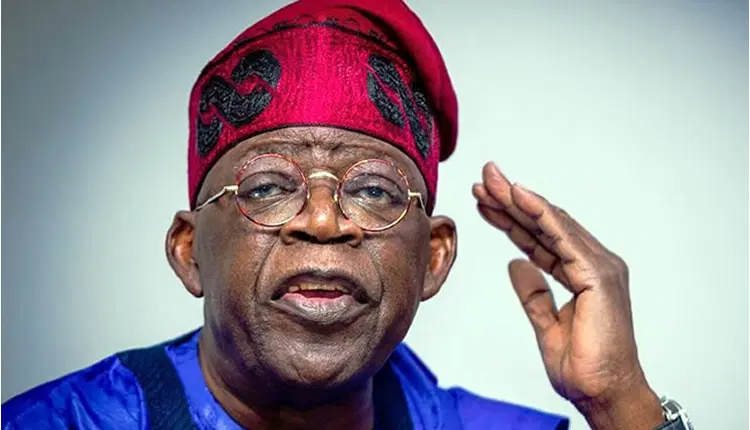
When President Bola Ahmed Tinubu assumed office in May 2023, he inherited a nation under enormous strain. Nigeria was facing a fragile economy, a broken subsidy regime, a deeply distorted foreign exchange environment, persistent insecurity, high unemployment, weak productive confidence, and a citizenry increasingly exhausted by inflation, elite rhetoric, and slow institutional response. The expectations were therefore immense. Many Nigerians did not merely expect a new administration; they expected a new direction, a new seriousness, and a new capacity to convert state power into measurable national progress.
Since then, the Tinubu administration has pursued an agenda defined by scale, speed, and disruption. It has embraced major economic reforms, launched or accelerated high-profile infrastructure projects, signaled investment in health and education, and attempted to reposition the Nigerian state as more fiscally realistic, more reform-minded, and more internationally assertive. At the same time, these efforts have come with heavy costs. Inflation surged. Living conditions worsened for many households. Security threats persisted across multiple theatres. Public patience weakened. And criticism grew over whether the administration’s reform philosophy, while bold, has been sufficiently humane, well-sequenced, and socially cushioning.
This is what makes any serious review of President Tinubu’s record both important and complex. This is not a presidency that can be described simply as inactive or indecisive. On the contrary, it has been highly interventionist and visibly reformist. Yet activism in government is not enough. The deeper question is whether movement is translating into relief, whether reform is producing inclusion, and whether ambition is being matched by public trust. That is the true test of governance in Nigeria today.
The Tinubu presidency is therefore best understood as a government of hard resets and hard consequences. It is attempting to change long-standing structures that many previous administrations avoided confronting directly. That gives it strategic significance. But because Nigeria is a country where millions live on the edge of economic vulnerability, the legitimacy of reform depends not only on macroeconomic logic, but also on lived social outcomes. Citizens do not eat policy grammar. They experience prices, transport costs, school fees, insecurity, rent, and the shrinking value of income.
That is why this review matters. Nigerians need more than applause or condemnation. They need analysis. They need to understand what this administration is trying to do, what it has actually achieved, where it is struggling, and what these developments mean for the country’s direction.
Infrastructure Development: The Lagos-Calabar Coastal Highway
One of the most ambitious and controversial infrastructure undertakings associated with the Tinubu administration is the Lagos-Calabar Coastal Highway. The project has been presented as a transformational corridor intended to connect coastal states, stimulate commerce, support logistics, deepen inter-state connectivity, and open new layers of tourism and investment opportunity. Officially, the project stretches roughly 700 kilometres, and the administration has continued to frame it as a signature national asset rather than a regional vanity project. The first section has already moved through commissioning and financing milestones, with the presidency describing it as central to its infrastructure renewal logic.
From a strategic point of view, the idea has merit. Nigeria needs long-horizon infrastructure thinking. It needs transport corridors that unlock productivity, reduce business friction, improve supply chain movement, and create multiplier effects around industry, hospitality, housing, trade, and regional development. A country of Nigeria’s scale cannot develop competitively on weak connectivity. Serious economies are built on roads, rails, power, ports, and digital networks, not merely on slogans. In that sense, a project of this nature speaks to a government that wants to leave behind a visible physical legacy.
Yet the project also captures one of the central dilemmas of Tinubu’s presidency: how to pursue large national ambition in a season of intense citizen hardship. Critics have repeatedly questioned cost, procurement transparency, sequencing, compensation issues, and development priority. Concerns have also been raised about environmental consequences, community displacement, and whether the project reflects the most urgent use of scarce state capacity at a time when inflation, poverty, insecurity, and social infrastructure gaps remain severe. Public debate over the road has therefore gone beyond engineering; it has become symbolic of a bigger governance tension between visionary statecraft and social sensitivity.
That is where the administration must be careful. Big infrastructure can be good policy, but good policy still requires persuasion, transparency, sequencing, and protection of public confidence. In Nigeria, distrust grows when citizens see monumental projects without equally visible relief in the basics of daily life. A road can be strategic and still be politically mishandled. The Tinubu government must therefore keep proving that the Lagos-Calabar Coastal Highway is not merely grand, but justified, fairly implemented, and aligned with broader national benefit.
Economic Measures: Reform, Subsidy Removal, and the Cost of Transition
If one decision defined the Tinubu administration from its earliest days, it was the removal of the fuel subsidy. It was one of the boldest and most politically costly economic choices made by any Nigerian president in recent years. Tinubu argued that the subsidy had become fiscally unsustainable and that its continuation would keep draining national resources needed for more productive uses. In macroeconomic terms, the logic was clear: subsidies were expensive, distortionary, and frequently captured by inefficiency and abuse. In political terms, however, the consequences were immediate and brutal. Petrol prices rose sharply. Transportation costs surged. Food inflation deepened. Household purchasing power weakened. And the cost-of-living crisis intensified.
The Tinubu administration has consistently defended this decision as necessary medicine. From its perspective, the old model was unsustainable, and real reform could not begin until major distortions were confronted. Broader fiscal and foreign exchange reforms were also pursued, reinforcing the administration’s self-image as a government willing to do what previous governments postponed. International observers and institutions have acknowledged some improvement in fiscal position and reform momentum, even as they continue to note that inflation and hardship remain major burdens.
But while the economics of subsidy removal may be defensible, politics is not won on theory alone. The ordinary Nigerian has judged this reform less by fiscal charts and more by daily survival. Reform that improves public finance but weakens social stability without adequate cushioning quickly loses moral appeal. This is why many of the administration’s intervention efforts, including support mechanisms for small businesses and nano-enterprises, matter so much. The Presidential Conditional Grant Scheme and the broader intervention architecture around MSMEs were designed to offer some relief to vulnerable and productive sectors. These measures show that the government recognises the need for cushioning, but the key public question remains whether the scale, speed, and reach of these interventions are sufficient relative to the pain unleashed by reform.
This is the heart of the Tinubu economic challenge. The administration wants to be remembered as the government that stopped pretending, confronted structural distortions, and laid the foundation for stronger growth. Yet for millions of Nigerians, the immediate memory is one of hardship. That gap between reform intention and social experience is politically decisive. Unless growth becomes more visible, inflation becomes more manageable, and relief becomes more tangible, the government may continue to win the argument among policy elites while losing confidence among ordinary citizens.
Security Challenges: Persistent Threats and the Burden of State Protection
No Nigerian government can be judged seriously without reference to security, because security is the first moral duty of the state. On this front, Tinubu’s record remains mixed and deeply pressured. His administration has had to confront a security map that is not only violent but fragmented: insurgency in the North-East, banditry in the North-West, kidnappings across major corridors, communal conflicts in parts of the Middle Belt, criminal opportunism in peri-urban and rural zones, and recurrent fear among citizens who increasingly experience insecurity as a normal part of life.
Recent attacks in Maiduguri, including deadly explosions in March 2026, underlined the continuing danger posed by extremist violence and the fragility of claims that Nigeria has moved decisively beyond the worst phases of insurgent threat. Wider reporting has also highlighted the persistence and spread of violence across multiple regions, reinforcing concerns that while the administration responds, the larger security architecture still struggles with coherence, intelligence depth, and sustainable dominance.
To be fair, the Tinubu government did not create Nigeria’s insecurity. It inherited a multilayered national crisis shaped by years of institutional weakness, under-policing, poor intelligence integration, porous territorial control, elite complicity in some regions, judicial weakness, social breakdown, and cross-border criminality. But inheritance is not exoneration. Every administration is ultimately judged by what it does with what it meets.
The current presidency has shown willingness to respond, but many Nigerians are still waiting for something more integrated than reaction. Security is not just about troop deployment after attacks. It is about predictive intelligence, state coordination, local legitimacy, logistics, technology, prosecution capacity, economic stabilisation in vulnerable communities, and visible restoration of citizen confidence. The deeper worry today is that insecurity in Nigeria has become too normalised. When a people begin to adjust psychologically to recurring violence, the moral authority of the state starts to thin.
This is an area where Tinubu still has a major opportunity. If his administration can develop a more coherent, intelligence-driven, multi-level security doctrine and produce visible territorial and civilian gains, it will strengthen both state legitimacy and national confidence. If not, insecurity may remain the issue that overshadows many other reforms.
International Relations: Sovereignty, Diplomacy, and Strategic Pressure
President Tinubu has also had to navigate a more complicated international environment than many anticipated. One of the more sensitive episodes involved U.S. rhetoric around alleged anti-Christian violence in Nigeria. The controversy escalated into a diplomatic stress point when then-President Donald Trump invoked the language of “Christian genocide,” drawing global attention and placing Abuja under a difficult spotlight. Nigerian officials pushed back strongly, insisting that the country’s security crisis is complex, multi-causal, and not reducible to a simplistic sectarian genocide narrative. Subsequent reporting showed that the issue evolved into a delicate mix of diplomatic pressure, sovereignty management, and security cooperation.
This episode exposed both a challenge and a lesson. The challenge is that Nigeria’s internal failures can quickly become the subject of external interpretation and external pressure. The lesson is that foreign relations in a fragile security era require precision, maturity, and narrative discipline. Nigeria must protect its sovereignty without denying the seriousness of its internal security failures. It must reject misleading external labels without sounding dismissive of real suffering. And it must maintain strategic partnerships without appearing dependent or directionless.
Tinubu’s administration deserves some credit for trying to manage that balance. But the episode also reveals a larger truth: a country that does not secure itself effectively creates room for others to define its crisis for it.
Healthcare and Education: Important Signals, But Delivery Will Be the Real Test
Amid the louder conversations around economics and security, the Tinubu administration has also taken steps in healthcare and education that deserve attention. The National Health Fellows Programme, structured around 774 fellows, reflects an effort to improve public health coordination and capacity at the local level. The presidency later moved from programme launch to employment approval, which is important because many public initiatives in Nigeria fail by never progressing from announcement to structure.
Similarly, the administration’s support for six cancer centres and wider oncology investment points to a recognition that healthcare infrastructure must move beyond rhetoric if Nigeria is to reduce medical vulnerability and dependence. Cancer care has long exposed a painful national weakness: too many Nigerians face late diagnosis, weak treatment pathways, high costs, and the emotional and financial devastation of limited access. These investments suggest a more serious attempt to address tertiary health capacity, even though long-term success will depend on equipment functionality, staffing quality, financing models, regional accessibility, and maintenance discipline.
In education, the establishment of the Federal University of Environment and Technology in Ogoniland carries both symbolic and developmental value. It signals federal recognition of a historically sensitive region while also positioning higher education as part of long-range social repair and regional inclusion. The move has already progressed beyond mere approval into institutional appointments and student admission milestones.
Still, Nigerians have learned to be cautious. A government announcement is not the same as sustained institutional success. The Tinubu administration will only earn durable credit in health and education if these investments become functional, accessible, well-governed systems rather than headline projects.
Looking Ahead: Balancing Ambition with Pragmatism
The defining challenge of the Tinubu presidency is not whether it has ambition. It clearly does. The defining challenge is whether it can convert ambition into legitimacy, reform into relief, and movement into measurable public benefit. This is where pragmatism becomes essential.
A reforming government must understand timing. It must understand sequence. It must know that citizens can tolerate pain when they believe sacrifice is fairly distributed, honestly explained, and likely to yield visible gains. But when pain is immediate, elite comfort appears uninterrupted, and relief mechanisms feel thin or uneven, reform begins to look like punishment.
Tinubu’s government still has time to shape its legacy more favourably. But it must now move from disruptive beginnings to socially intelligent consolidation. That means clearer public communication, more visible anti-waste discipline, stronger citizen cushioning, sharper security reform, and a deeper emphasis on implementation credibility. Nigerians are not opposed to hard decisions. What they resist is one-sided pain, slow relief, and elite insulation.
Conclusion
President Bola Ahmed Tinubu’s tenure so far has been marked by seriousness of intent, bold reform appetite, and a willingness to confront long-postponed national issues. His administration has pursued major infrastructure vision, significant economic restructuring, policy activism in health and education, and a determined public argument that Nigeria can no longer afford old illusions. In that sense, this is not a passive presidency.
But activism alone is not enough. The true measure of leadership is not how many major decisions are announced, but how deeply they improve the life of the people. On that front, Tinubu’s government remains under intense examination. Nigerians have seen movement, but many are still waiting for relief. They have heard reform, but many are still measuring hardship. They have watched ambition, but they still want assurance that the burden of national adjustment will not always fall hardest on those already weakest.
That is why the Tinubu presidency must now mature from bold disruption to balanced delivery. It must prove that reform can be firm without being socially blind, that state ambition can coexist with public compassion, and that the language of transformation can produce visible national stability.
Nigeria stands at a serious crossroads. The country does not need another cycle of impressive announcements followed by weak citizen outcomes. It needs leadership that can carry both the macroeconomic state and the moral state of the people. Whether President Tinubu ultimately succeeds will depend not only on the courage of his reforms, but on the fairness, intelligence, and humanity with which they are implemented.
For Further Action
For institutions, leaders, policymakers, and citizens seeking deeper insight into governance, public leadership, strategy, institutional transformation, and decision-making in Nigeria, connect with AAJ Consulting Limited, Abuja, Nigeria. From leadership development to governance advisory and organisational transformation support, AAJ Consulting brings strategic clarity rooted in Nigerian realities.
Call/WhatsApp: +2347033823104



Comments
Join the conversation. Share your perspective, question, or insight.